 860
860 


About Documents
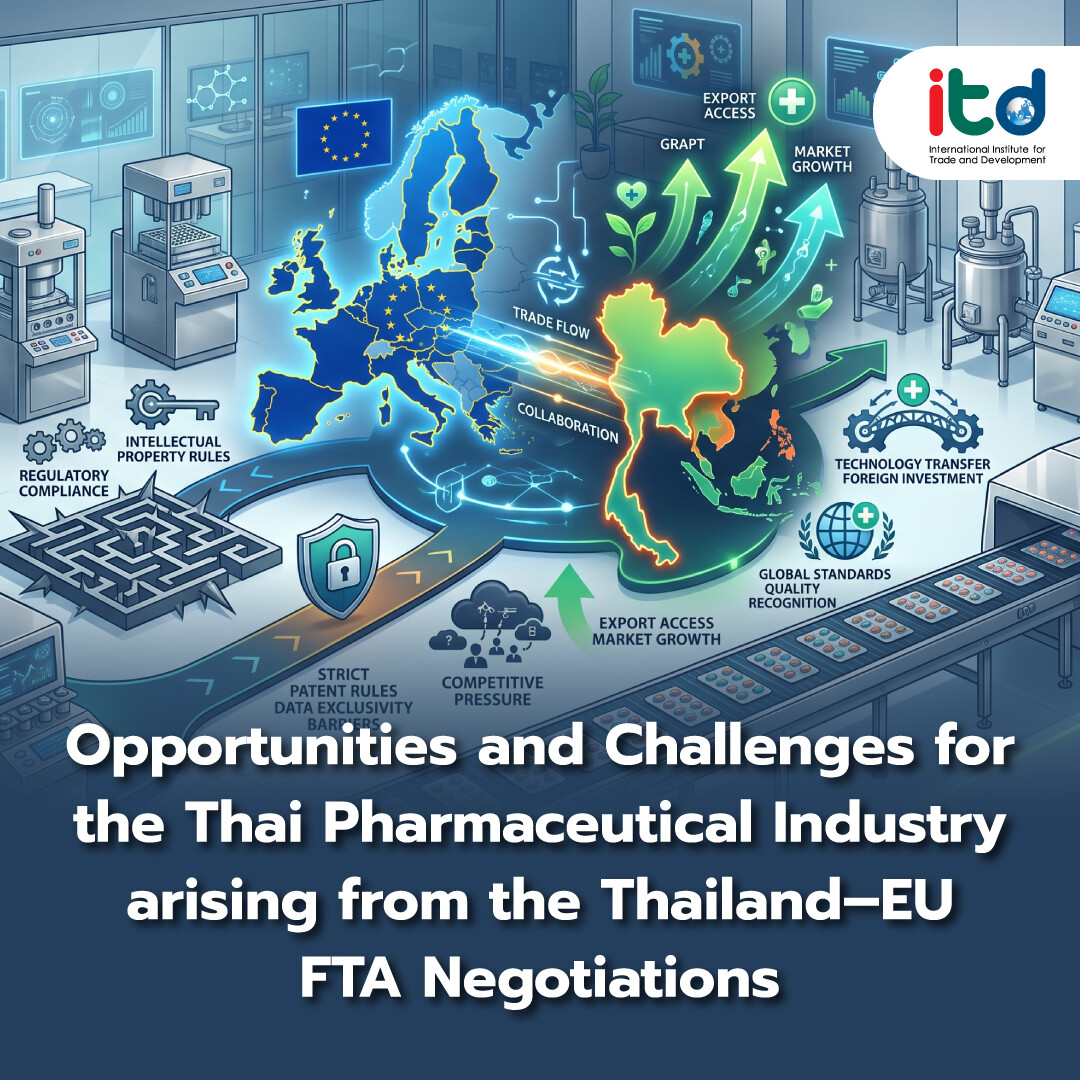
Thailand’s pharmaceutical industry plays a critical role in the national healthcare system and is expected to continue expanding in the coming years. It is projected that the domestic pharmaceutical market will grow at an average annual rate of 6–7% during 2025–2027. Approximately 90% of the industry consists of generic drug manufacturing, primarily serving domestic consumption, with hospitals functioning as the main distribution channel and accounting for nearly 80% of total market value.
This growth is partly driven by the advancement of Thailand’s universal health coverage system, which now covers almost the entire population and has significantly improved access to healthcare services. However, despite the clear growth trajectory of the domestic market, the Thai pharmaceutical industry continues to face a combination of supportive external factors and structural constraints.
A key driver of industry growth is Thailand’s demographic transition toward an aging society, which has led to a substantial increase in demand for pharmaceuticals used to treat non-communicable diseases (NCDs), including hypertension, cardiovascular disease, and diabetes. In addition, the expansion of health and wellness tourism, together with changing consumer behavior toward preventive healthcare, has become an important source of market growth.
Moreover, advances in pharmaceutical technology (Pharma Tech), particularly the application of artificial intelligence (AI), are accelerating drug development by improving formulation efficiency, enhancing safety, and increasing the ability to predict adverse effects during clinical trials. At the same time, the growing use of medical big data has supported more personalized treatment approaches. Drug development based on individual genetic profiles integrated with other health-related data has emerged as a significant factor in improving treatment outcomes and creating higher value within the pharmaceutical industry.
On the other hand, one of the major challenges facing the industry lies in structural limitations. Thai manufacturers continue to have limited capacity to produce complex pharmaceutical products and remain highly dependent on imported active pharmaceutical ingredients (APIs), which account for approximately 90% of all raw materials used in domestic drug production. This dependency exposes manufacturers to fluctuations in production costs resulting from exchange rate volatility and changes in global market prices. Furthermore, the industry faces increasing competition from lower-cost imported pharmaceuticals, particularly from China and India.
In addition, efforts to upgrade manufacturing standards to meet international requirements, such as GMP-PIC/S standards, along with compliance with environmental, social, and governance (ESG) frameworks and greenhouse gas reduction initiatives aligned with Net Zero targets, are expected to generate long-term benefits. However, in the short term, these transitions impose substantial cost burdens, especially on small and medium-sized enterprises (SMEs) with limited financial capacity.
In conclusion, Thailand’s pharmaceutical industry is currently at a critical stage of transformation. To overcome existing constraints and achieve sustainable growth, industry participants must accelerate the adoption of technology and innovation to improve efficiency and reduce production costs. At the same time, the sector should move beyond conventional generic drug manufacturing toward research and development of innovative pharmaceuticals and high-value complex biologics. Government support will also be essential through concrete policy measures, including incentives for domestic API production, research funding, and regulatory reforms that facilitate clinical trials and pharmaceutical innovation. Such efforts will reduce import dependency and strengthen Thailand’s position as a leading medical hub in Asia.
Author:
Mrs. Paveenuch Udommaneetanakit
Senior Researcher
International Institute for Trade and Development (ITD)
www.itd.or.th
Publication: Bangkok BIZ Newspaper
Section: First Section/World Beat
Volume: 39 Issue: 13171
Date: Wednesday, May 27, 2026
Page: 8 (bottom)
Column: “Asean Insight”