 615
615 


About Documents
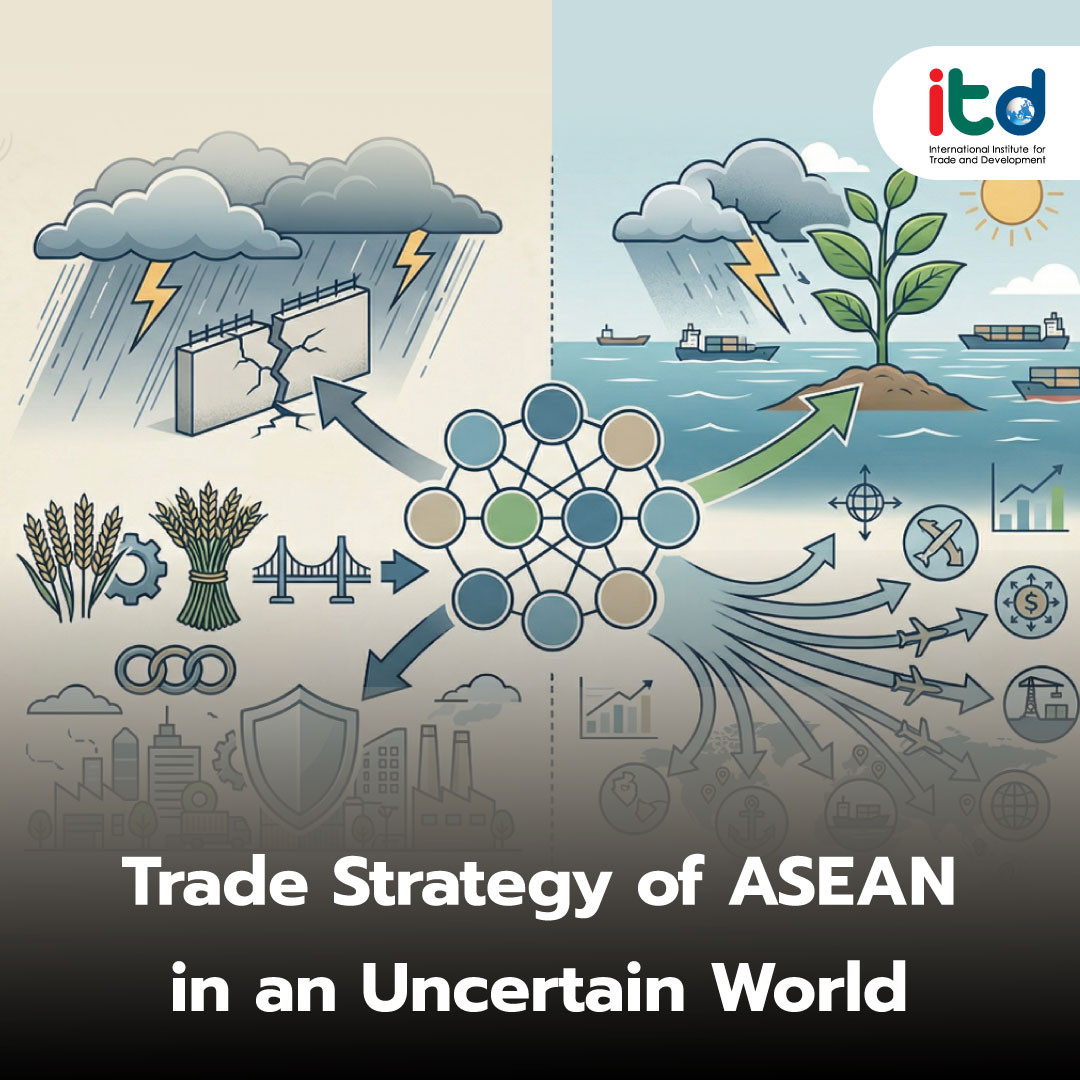
From the current global economic system, which is highly uncertain, the definition of “export competitiveness” has completely changed. Competing on price or reducing lead times may no longer be the most important strategies. This is especially true for countries that rely mainly on exports, as they face a more complex and stricter trade environment.
Therefore, ASEAN countries need to implement a “parallel trade strategy,” which includes:
1. Maximizing the utilization of regional trade agreements, and 2. Adapting to stricter regulations from major trade markets such as the European Union and the United States.
Strategy 1: Maximizing the Utilization of Regional Trade Agreements. One key agreement is the Regional Comprehensive Economic Partnership (RCEP). As Western countries have created more complex and strict trade regulations, RCEP, which is the largest free trade agreement in the world that covers over 15 countries (10 ASEAN countries plus China, Japan, South Korea, Australia, and New Zealand), may help balance these challenges. This is because RCEP has more flexible trade rules and preferential tariff treatment that cover over 90% of goods among member countries. It also allows more flexible access to raw materials and supports technological integration among members.
In addition, RCEP’s cumulative rules of origin allow raw materials and production processes from all 15 member countries to be counted toward the originating status of a final product.
This is an important mechanism that facilitates the claiming of preferential tariffs across the region, reduces the complexity of supply chain compliance. Compared to typical bilateral free trade agreements, this system makes it easier for products to meet value-added requirements. For example, a car manufacturer in Thailand that assembles vehicles using steel from Japan and other parts from ASEAN countries can still qualify for tariff benefits.
Strategy 2: Adapting to Strict Regulations from Major Trade Markets. The year 2026 is an important turning point for the convergence of trade regulations. This includes frameworks related to environmental, social, and governance (ESG), functioning as mandatory baselines rather than mere extensions of traditional corporate social responsibility. Exporters must face stricter trade measures, such as the European Union’s Carbon Border Adjustment Mechanism (CBAM). This is a structural change designed to prevent carbon leakage by applying carbon pricing to imported goods. Affected export products include steel, aluminum, cement, fertilizers, and electricity.
In addition, the Corporate Sustainability Reporting Directive (CSRD) requires organizations to assess their ESG practices and their financial impacts. It also requires organizations to evaluate how their operations affect the environment and society. These regulations go beyond environmental issues and encompassing social standards that require verifiable traceability. Therefore, organizations must implement comprehensive data management systems and strictly monitor their entire supply chains. They must ensure that all suppliers at every production level fully comply with the regulations.
Ultimately, to maintain trade competitiveness and retain market access to major global economies, ASEAN countries need to implement a “parallel trade strategy,” as this strategy might be the key to achieving these goals.
Author:
Mr. Atit Saerepaiboonsub
Senior Researcher
International Institute for Trade and Development (ITD)
www.itd.or.th
Publication: Bangkok BIZ Newspaper
Section: First Section/World Beat
Volume: 39 Issue: 13141
Date: Wednesday, Apr. 15, 2026
Page: 12 (bottom)
Column: “Asean Insight”