 726
726 


About Documents
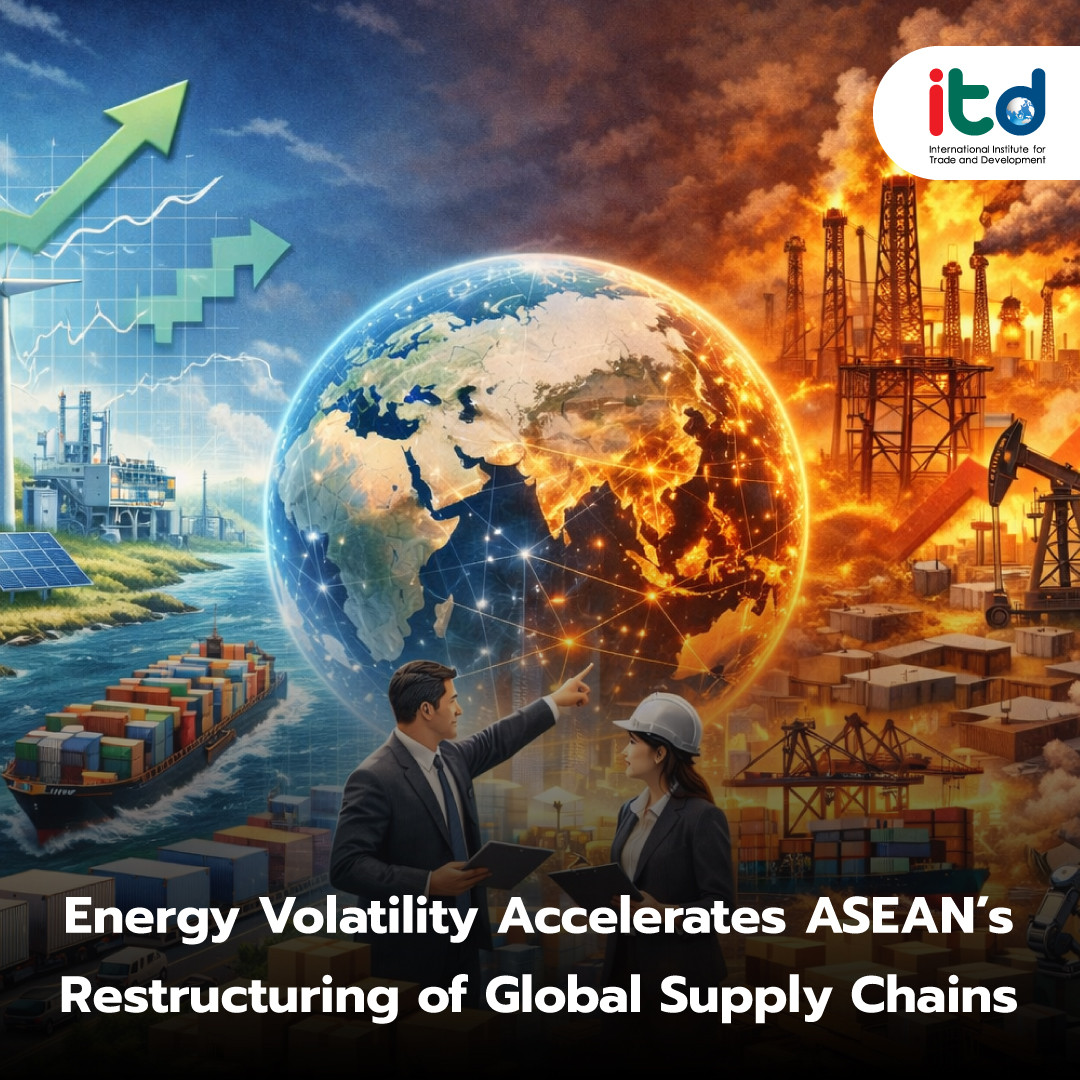
The escalation of conflict in the Middle East since late February 2026 has become a significant catalyst accelerating structural adjustments in the global economy, particularly in developing Asia and the Pacific, a region highly dependent on energy imports. The report Asian Development Outlook April 2026: The Middle East Conflict Challenges Resilience in Asia and the Pacific indicates that crude oil prices increased rapidly, with Brent exceeding $100 per barrel, while the Oman benchmark, more relevant for Asia, rose even more sharply. This reflects a substantial increase in the region’s effective energy costs.
In addition, the Strait of Hormuz, a critical global energy transport route, accounts for more than 25% of global seaborne oil and around 20% of liquefied natural gas (LNG) trade. Over 80% of these flows are destined for Asia. Therefore, risks of disruption to this chokepoint directly affect production costs and the stability of regional supply chains.
The impact of the crisis extends beyond energy to other production inputs, including fertilizers and materials used in semiconductor manufacturing, which are linked to exports from the Middle East. This has increased costs in both the agricultural and industrial sectors and may generate sustained inflationary pressures.
Although economic growth in Asia and the Pacific remains positive, it is expected to moderate. Growth is projected at approximately 5.1% in 2026–2027, down from 5.4% in 2025. Under a prolonged conflict scenario, growth could decline further to 4.7%, while inflation could rise to as high as 5.6%, reflecting the region’s vulnerability to energy shocks.
Against this background, global supply chains are shifting from a model focused on cost efficiency toward one that prioritizes resilience. Firms are increasingly diversifying production bases and adopting multi-hub production networks as a core strategic adjustment.
ASEAN has the potential to function as a “regional production system” capable of accommodating these changes. Economic growth in ASEAN is expected to remain around 4.6% during 2026–2027, supported by resilient domestic demand and infrastructure investment despite external pressures.
Several ASEAN economies demonstrate strong performance. Viet Nam continues to grow above 7%, while Indonesia and the Philippines expand at 4–5%, and Malaysia at approximately 4.5%. This highlights ASEAN’s potential as an alternative global manufacturing hub, particularly in electronics, electric vehicles, and clean energy industries. However, structural vulnerabilities persist, especially in energy-importing economies such as Thailand, where growth remains relatively low at 1.8–2.0%, reflecting ongoing structural constraints.
Given these conditions, policy strategies at the regional level should aim to strengthen systemic resilience, with key directions as follows:
First, fiscal policy should be targeted, providing temporary support to households and firms affected by rising energy costs, while preserving long-term fiscal sustainability.
Second, monetary policy must remain clear and credible to anchor inflation expectations, particularly as inflation in the region could rise from 3.6% to as high as 5.6% under severe scenarios.
Third, strengthening ASEAN cooperation is essential, especially in energy connectivity initiatives such as the ASEAN Power Grid, the development of resilient supply chains, and trade facilitation to reduce dependence on external factors.
Fourth, sustained long-term investment in infrastructure, education, and digital systems is necessary, as these form the foundation for future growth and industrial upgrading. In conclusion, energy volatility resulting from the Middle East conflict highlights that the global economy is entering a phase where resilience is as important as efficiency. Regions capable of effectively integrating energy, production, and trade systems will gain a competitive advantage. ASEAN has the potential to emerge as a central node in the new global supply chain architecture, provided that it accelerates regional cooperation and addresses remaining structural constraints.
Author:
Ms. Namphueng Tassanaipitukkul
Senior Researcher
International Institute for Trade and Development (ITD)
www.itd.or.th
Publication: Bangkok BIZ Newspaper
Section: First Section/World Beat
Volume: 39 Issue: 13146
Date: Wednesday, Apr. 22, 2026
Page: 8 (bottom-right)
Column: “Asean Insight”