 567
567 


About Documents
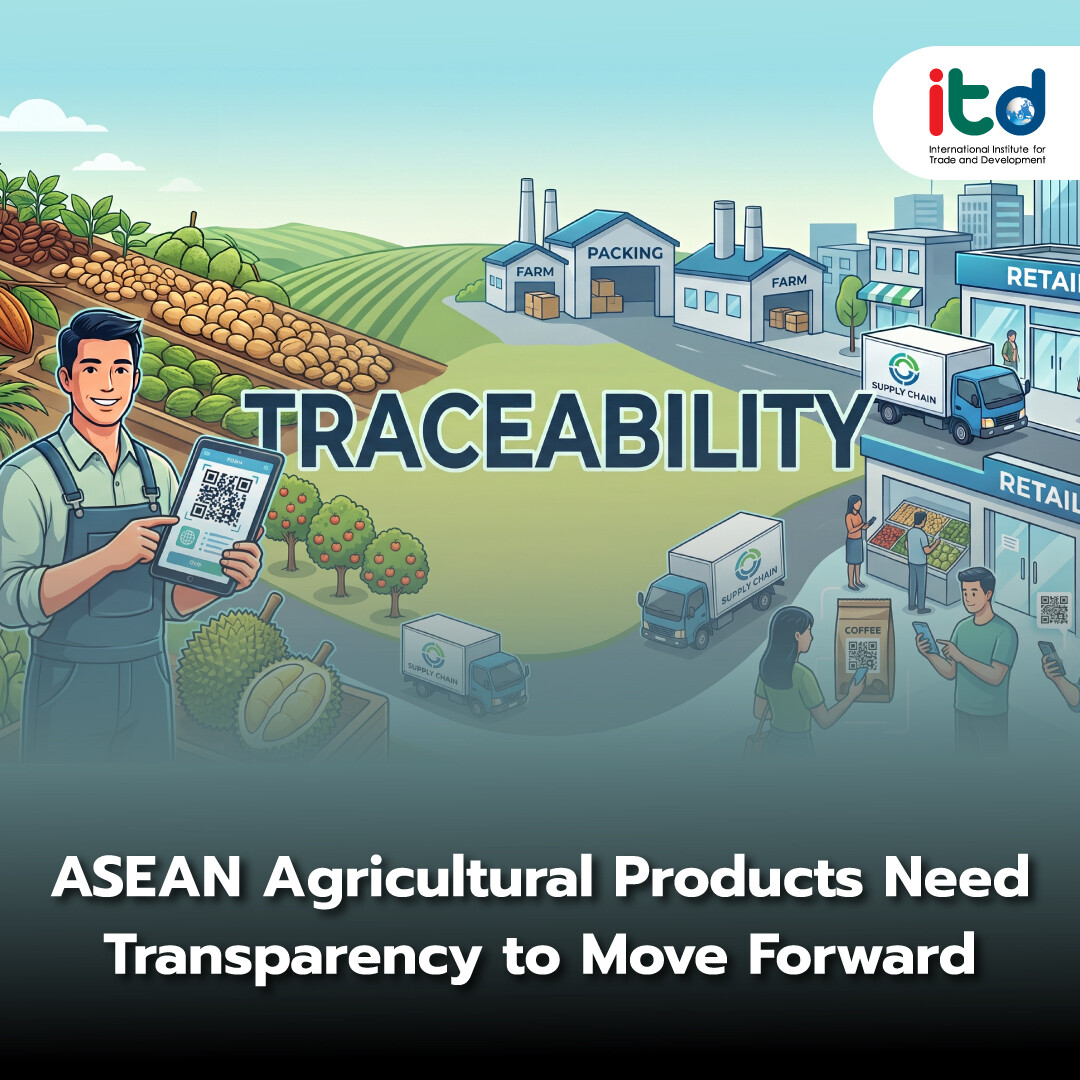
Traceability is an important mechanism for upgrading ASEAN agricultural products, especially as destination markets increasingly prioritize food safety, supply chain transparency, and sustainable production. This mechanism helps identify and track products from the production site to the consumer. When a product-related problem occurs, it allows corrective action to be taken more precisely and quickly. It also helps reduce losses from product recalls and strengthens confidence among consumers and destination markets.
In addition to its benefits for food safety, traceability can serve as evidence to verify production processes, labor practices, and the use of agricultural chemicals. These elements support sustainability claims, which are becoming an important condition for access to global markets, particularly markets that place strong emphasis on environmental protection, human rights, and social responsibility.
Many countries have strengthened traceability requirements to regulate imports of agricultural products. For example, the European Union requires operators to trace food and raw materials at all stages under Regulation (EC) No. 178/2002. Under the EU Deforestation Regulation (EUDR), certain agricultural products must be proven not to have been produced on land associated with deforestation. In the United States, the U.S. Bioterrorism Act and the Food Safety Modernization Act (FSMA) require information systems that support effective traceability.
In Asia, China has increasingly used traceability as an important tool for regulating agricultural imports. In a recent case, on July 2, 2026, the Office of Agricultural Affairs in Beijing reported that China had announced stricter import controls on durian from Vietnam. The measures require verification of orchard registration codes and packinghouse registration codes. These codes must match the supporting import documents, including import declarations, customs documents, and phytosanitary certificates. If products are not registered or if the information does not match, the shipment will be detained or returned immediately. Operators may also face penalties, including possible blacklisting.
These measures were introduced after authorities found that some exporters had used orchard or packinghouse registration codes belonging to others, and that produce from uncertified orchards had been mixed with certified products. China’s stricter measures aim to improve the traceability system for imported tropical fruits, reduce risks from pests and chemical residues, and raise standards for production, harvesting, and packing throughout the supply chain. This reflects a broader shift in which traceability is moving beyond a quality control mechanism and becoming a basic condition for market access.
For ASEAN, although many countries have begun to recognize the importance of traceability, the development of such mechanisms still requires attention to several issues. These include the lack of common standards accepted by all stakeholders, incomplete data connectivity among agencies, and limitations in cost and capacity among relevant actors. Although digital technologies are now being applied to traceability, wider adoption still requires investment and incentives from both the public and private sectors.
Going forward, ASEAN needs to accelerate the development of more effective domestic traceability systems. These systems should connect data from farmers, packinghouses, exporters, and relevant agencies so that information is accurate, transparent, and verifiable across the supply chain. At the same time, ASEAN should develop data standards and mechanisms for cross-border information exchange within the region. This would help facilitate trade and support compliance with the increasingly stringent requirements of global markets.
Therefore, the future competitiveness of agricultural products may no longer be measured by product quality alone. It will also depend on the ability to prove product origin and production processes in a transparent manner. Developing traceability systems is therefore not only a matter of complying with the requirements of trading partners. It is also an investment in raising agricultural product standards and strengthening ASEAN’s long-term and sustainable competitiveness.
Author:
Ms. Natjaree Petruang
Researcher
International Institute for Trade and Development (ITD)
www.itd.or.th
Publication: Bangkok BIZ Newspaper
Section: First Section/World Beat
Volume: 39 Issue: 13201
Date: Wednesday, Jul. 8, 2026
Page: 8 (bottom)
Column: “Asean Insight”