 929
929 


About Documents
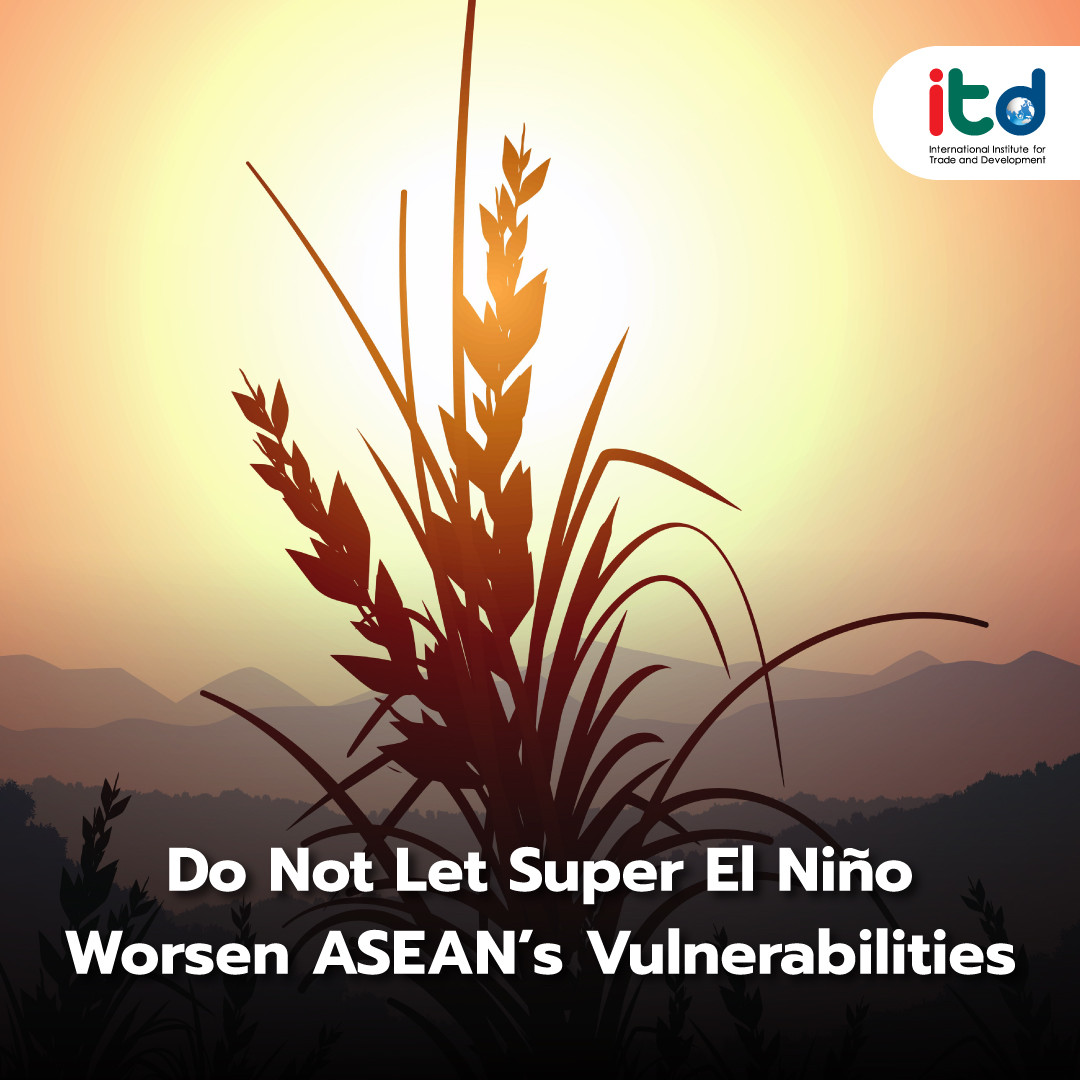
The World Meteorological Organization (WMO) has warned of ongoing changes in the tropical oceans, where rapidly rising sea surface temperatures indicate the potential onset of an El Niño event as early as May-July 2026, with increasing intensity thereafter. Forecasts from the International Research Institute for Climate and Society at Columbia University suggest a 70% probability of El Niño developing in April-June 2026, with an 88-94% likelihood that the event will persist through the end of the year.
El Niño is a recurring climatic phenomenon that typically occurs every 2–7 years and lasts approximately 9–12 months. It is characterized by a warming of ocean surface temperatures in the central and eastern Equatorial Pacific, which in turn influences regional temperature and precipitation patterns. In ASEAN member states, El Niño conditions are generally associated with high temperatures and reduced rainfall.
The term “Super El Niño” is not an official scientific classification but is commonly used to describe exceptionally intense El Niño events. Scientists and global monitoring agencies are closely observing indicators of a potential 2026 El Niño event, which could rank among the most severe ever recorded. However, the actual strength of the forthcoming event remains uncertain based on current evidence.
Southeast Asia is particularly vulnerable to El Niño due to its geographic location and economic structure, which remains heavily dependent on agriculture and natural resources. The region experienced significant impacts during the 2015–2016 El Niño, including prolonged droughts, widespread wildfires, and shortages of clean water. More recently, the 2023–2024 El Niño, compounded by ongoing climate change, contributed to extreme heat conditions and record-breaking temperatures across ASEAN.
If a strong El Niño event occurs this year, ASEAN countries are likely to face severe consequences. These include heightened risks of water scarcity, drought, extreme heat, and forest fires. These environmental stresses may be further exacerbated by geopolitical factors, particularly ongoing conflicts and potential disruptions to the Strait of Hormuz. A prolonged disruption would create a polycrisis, simultaneously affecting water and energy security in ASEAN.
In such a scenario, ASEAN’s agricultural sector would be among the most severely affected. Rising fuel and fertilizer costs would increase production expenses, potentially prompting farmers to reduce cultivated areas to manage costs. At the same time, drought conditions would likely reduce crop yields. This combination would lead to lower market supply, higher commodity prices, and threaten global food security, given ASEAN’s role as a major food-producing region.
Key agricultural commodities in ASEAN are expected to be particularly vulnerable. Rice cultivation, especially wet-season rice, would face water shortages and irregular rainfall patterns. Similarly, oil palm production could decline by an estimated 5–12% under prolonged and severe El Niño conditions.
In the trade and industrial sectors, investors expect manufacturing countries to be able to effectively manage disasters and natural phenomena, minimizing their impact as much as possible to maintain investor and trading partner confidence.
ASEAN’s ability to manage the impacts of this El Niño event will serve as a critical indicator of supply chain reliability in the region. Demonstrating resilience and adaptive capacity could enhance ASEAN’s attractiveness as an investment destination. But if ASEAN continues to react to crises one at a time without systemic reforms, it may permanently lose its strategic position as an investment destination. Super El Niño is not a phenomenon that ASEAN has encountered for the first time. It is a challenge that has been experienced and from which lessons have been learned. The damage from past El Niño events should not be viewed merely as a natural disaster, but as a clear warning sign that investing in climate adaptation and resilience is the most worthwhile investment.
Author:
Ms. Patcha Thamrong-ajariyakun
Senior Researcher
International Institute for Trade and Development (ITD)
www.itd.or.th
Publication: Bangkok BIZ Newspaper
Section: First Section/World Beat
Volume: 39 Issue: 13156
Date: Wednesday, May 6, 2026
Page: 8 (left)
Column: “Asean Insight”