 790
790 


About Documents
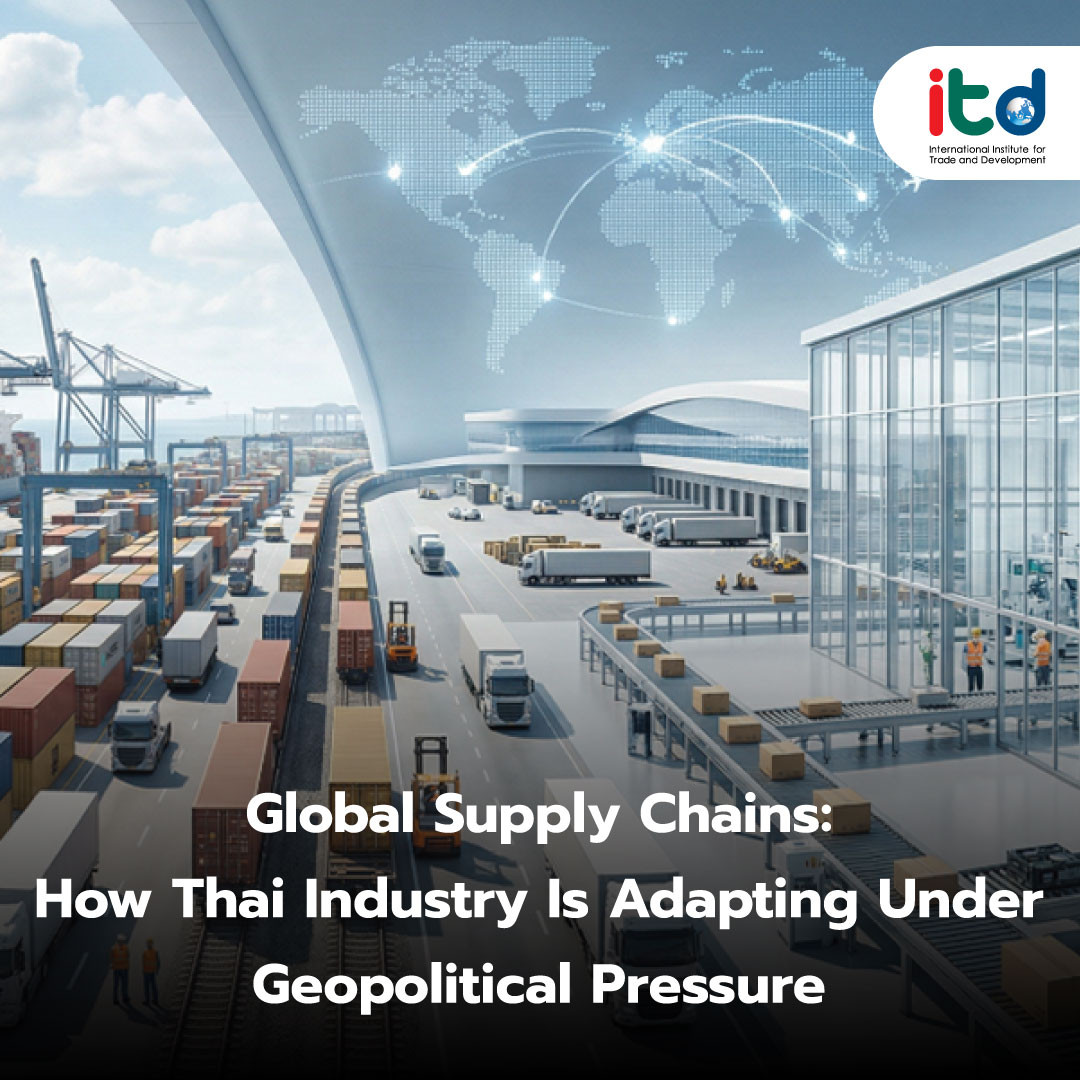
Over the past decade, the global economic order has faced increasing structural pressure. This includes the conflict in Ukraine, the trade war between the United States and China, and ongoing tensions involving the US, Israel, and Iran. These factors have weakened multilateral trade systems and pushed a major restructuring of global supply chains, the biggest since the era of globalization.
For Thailand, as a key manufacturing base with exports accounting for more than 65% of GDP, the country is facing structural vulnerability. Geopolitical uncertainty and global logistics disruptions have affected the entire value chain. At the same time, retaliatory tariffs from the US and unstable energy prices are putting pressure on costs and supply chain management in key industries. This is weakening production stability and the country’s overall competitiveness.
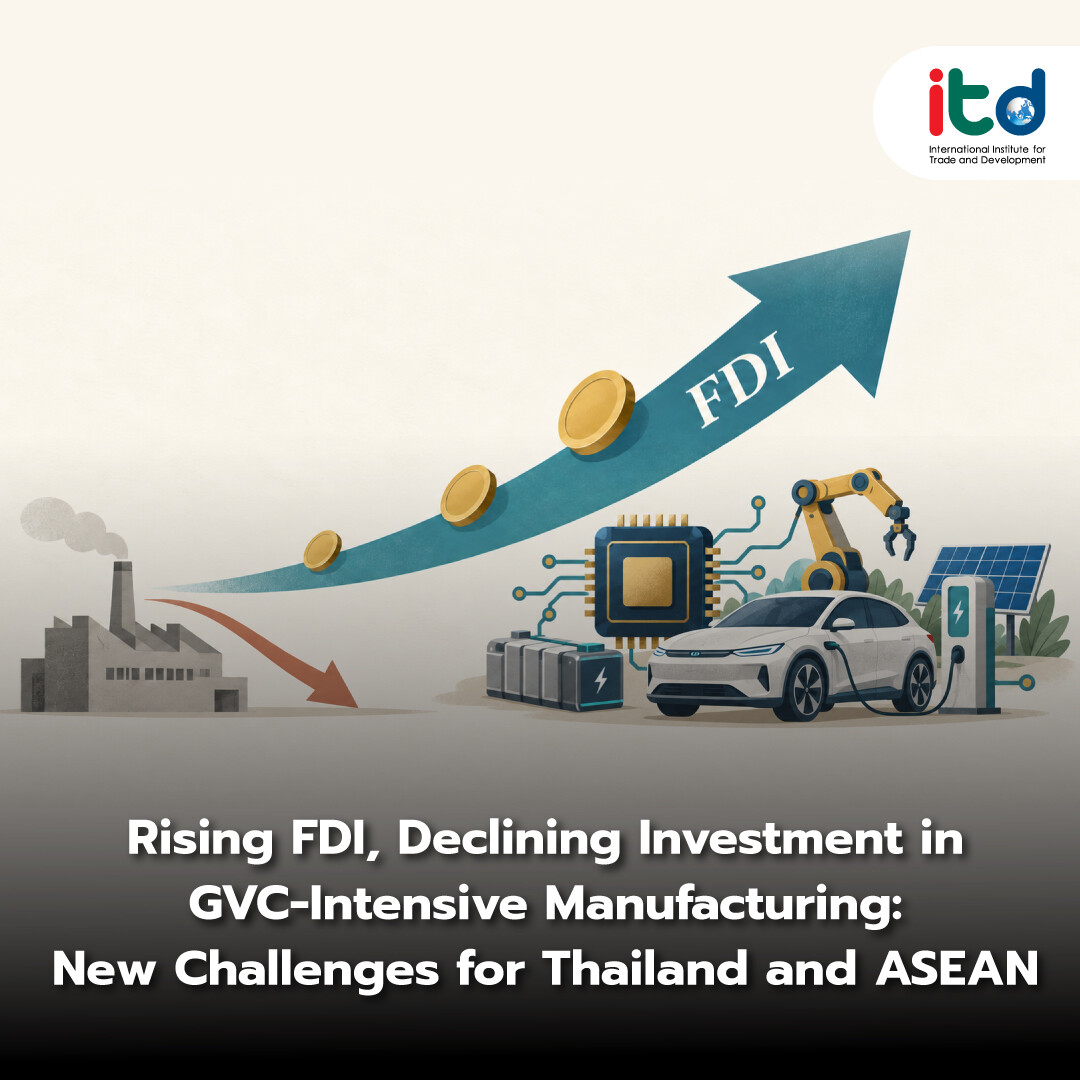
According to the January 2026 Global Trade Update by UNCTAD, geopolitical conflicts are rapidly reshaping global value chains. About two-thirds of global trade within value chains is being redirected. Multinational companies are now focusing more on risk management rather than just lowering labor costs. This has led to increased foreign direct investment (FDI) in ASEAN, with manufacturing investment in the region rising by 150% in 2024.
However, UNCTAD notes that Thailand may not be able to sustain these investment gains if it continues to rely on mid-level production with low added value. Countries with strong infrastructure, skilled labor, and clear long-term investment policies are more likely to attract future industries.
UNCTAD proposes three key areas for adjustment: First, value chain upgrading. Thailand should move toward more advanced and technology-intensive production, such as electric vehicles, medical devices, and clean energy technologies.
Second, the green transition. This involves combining environmental and digital strategies to meet global environmental standards and carbon pricing systems, which are becoming new measures of competitiveness.
Third, market diversification toward developing countries (South-South trade). This reduces reliance on major markets by expanding into high-potential regions like India, the Middle East, and Africa. UNCTAD reports that trade among developing countries has been steadily increasing and now accounts for about 57% of global trade.
These structural changes in the global economy are a major challenge for Thailand. The country needs to build more resilient supply chains by following UNCTAD’s approach, with clear policies and continuous investment in infrastructure, workforce skills, and innovation. This will help reduce dependence on external factors and strengthen long-term competitiveness.
The key issue for Thailand is not how to avoid geopolitical uncertainty, but how to turn it into a force for real structural reform. Strategic decisions made now will determine the country’s position and role in global supply chains over the next decade.
Author:
Mr. Kamol Panmuang
Senior Researcher
International Institute for Trade and Development (ITD)
www.itd.or.th
Publication: Bangkok BIZ Newspaper
Section: First Section/World Beat
Volume: 39 Issue: 13136
Date: Wednesday, Apr. 8, 2026
Page: 8 (bottom)
Column: “Asean Insight”