 1498
1498 


About Documents
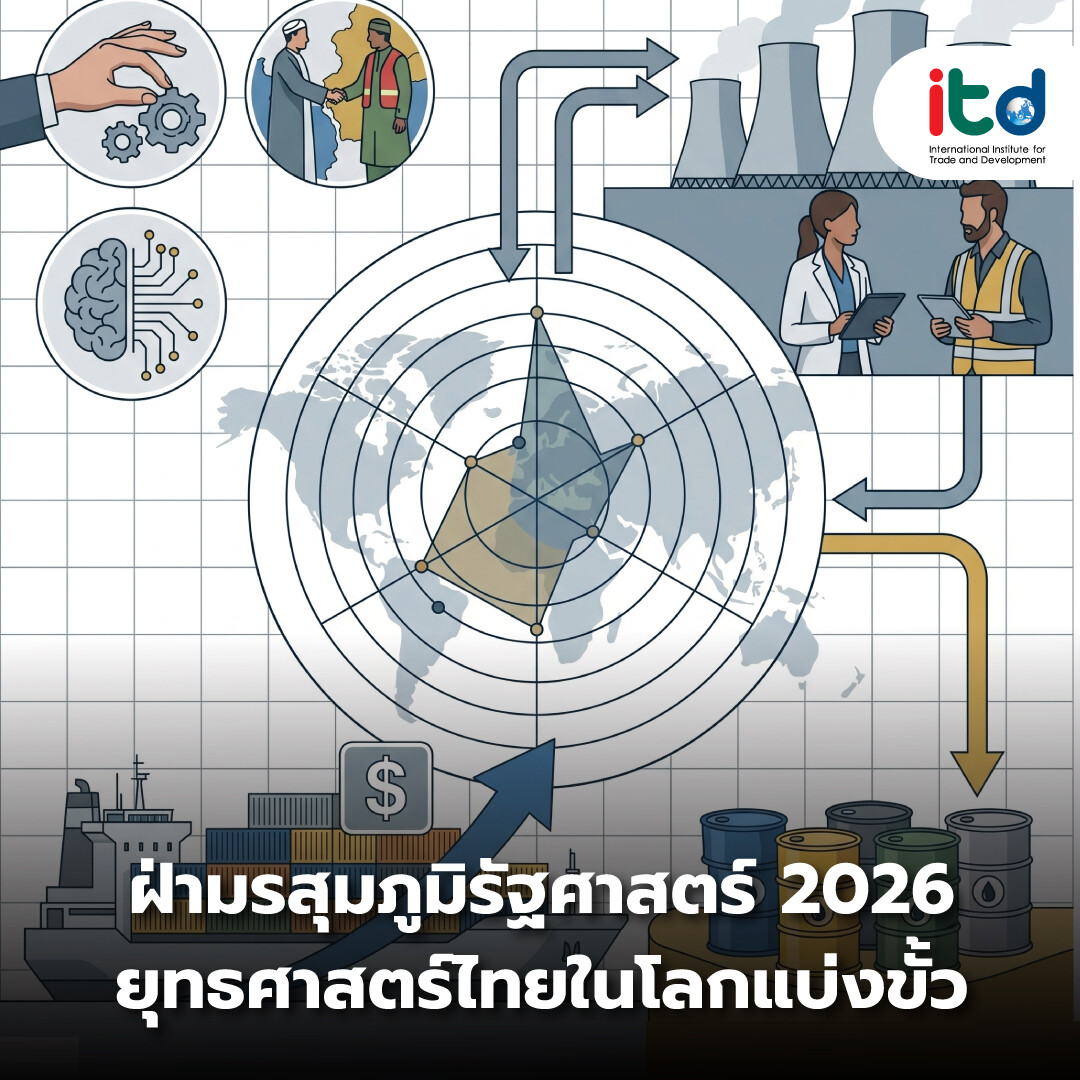
Economic integration and free trade have long served as key drivers of global economic growth. However, the international economic system is currently facing mounting pressures arising from geoeconomic fragmentation and increasingly protectionist trade measures. According to the Chief Economists’ Outlook published by the World Economic Forum (WEF) in May 2026, 89% of surveyed economists expect global economic growth to weaken over the next 12 months. The primary factors behind this outlook are the escalation of tensions in the Middle East and the closure of the Strait of Hormuz, both of which have severely disrupted global supply chains to a degree comparable to that experienced during the COVID-19 pandemic.
These developments have generated systemic risks that could undermine global stability. The International Monetary Fund (IMF) estimates that economic fragmentation could reduce global gross domestic product by as much as 7% in the long run. This assessment is consistent with the views of 94% of economists surveyed by the WEF, who anticipate a significant rise in global inflation driven mainly by supply-side disruptions and higher energy and food prices. Such developments not only intensify the cost-of-living crisis but also deepen social inequalities, particularly in developing economies that are more vulnerable to external shocks.
Amid growing uncertainty, de-risking strategies, along with reshoring and friend-shoring, have become central considerations for multinational corporations. The WEF report identifies Southeast Asia as one of the three most attractive business environments for multinational enterprises due to its flexibility and its role as a strategic node connecting supply chains across competing geopolitical blocs. This positioning has enabled Thailand, as a regional hub within ASEAN, to maintain its comparative advantages in the automotive, electronics components, and agro-processing industries.
Nevertheless, the WEF warns that Southeast Asia remains highly vulnerable because of its heavy dependence on imported energy and food. The region is therefore directly exposed to rising energy and fertilizer prices resulting from the Middle East crisis. Consequently, Thailand’s long-term competitiveness cannot rely solely on its geographical location. The country needs to pursue a strategy of proactive balancing through economic diplomacy while diversifying risks by expanding its network of free trade agreements (FTAs) with a broader range of markets.
Ultimately, both the public and private sectors in Thailand must capitalize on the China+1 trend and accelerate the transition toward high-technology manufacturing. At the same time, greater adoption of artificial intelligence (AI) technologies is essential. More than 90% of economists surveyed by the WEF regard AI as a critical factor capable of generating substantial productivity gains in the future. Strengthening digital infrastructure, developing smart logistics systems, promoting environmental, social, and governance (ESG) standards, and enhancing future workforce skills will be key to enabling Thailand to navigate global volatility and transform itself into a resilient hub for innovation and investment within global supply chains in a sustainable manner.
Author:
Mr. Kamol Panmuang
Senior Researcher
International Institute for Trade and Development (ITD)
www.itd.or.th
Publication: Bangkok BIZ Newspaper
Section: First Section/World Beat
Volume: 39 Issue: 13186
Date: Wednesday, Jun. 17, 2026
Page: 8 (bottom)
Column: “Asean Insight”