 842
842 


About Documents
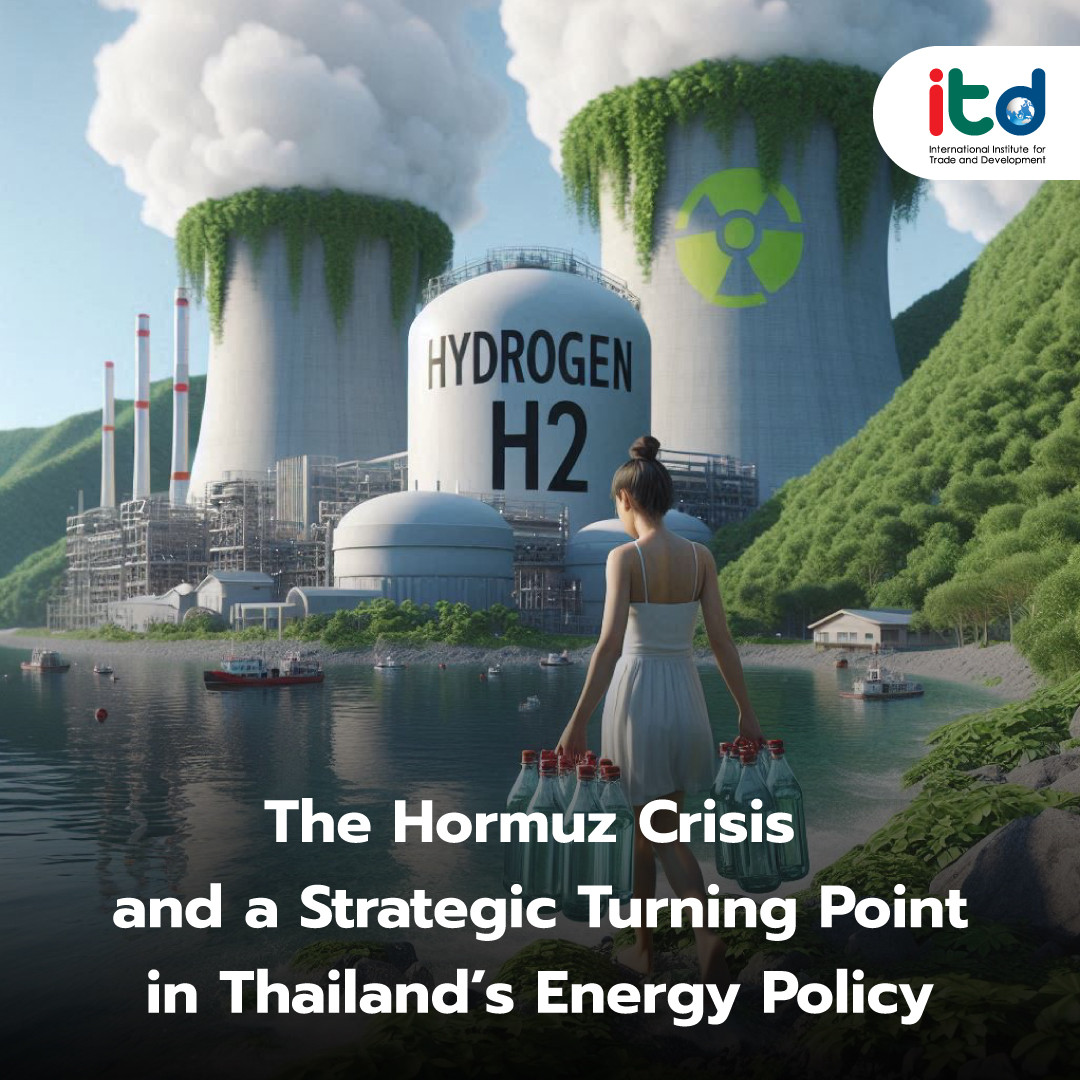
The escalating conflict among the United States, Israel, and Iran is becoming a critical catalyst that forces Thailand to confront a major strategic turning point. The Strait of Hormuz, a key route for global crude oil transportation, is at risk of closure. This geopolitical crisis is not merely a temporary disruption; rather, it constitutes significant structural pressure that compels Thailand to adjust its energy strategy through the Three Horizons framework in order to maintain national competitiveness and bargaining power in the global arena.
The Three Horizons framework is a strategic foresight tool that divides policy responses into three phases. The first horizon (Horizon 1) focuses on maintaining the stability of existing systems. In this phase, policy measures emphasize the diversification of energy import sources to reduce dependence on the Middle East. It also includes the management of strategic petroleum reserves to stabilize production costs and prevent severe impacts on inflation and domestic purchasing power.
The second horizon (Horizon 2) represents a transitional phase in which conflict acts as a driving force for structural reform. Thailand is required to move toward a fully liberalized electricity market and implement Third-Party Access (TPA) to energy networks. This phase prioritizes attracting investment in RE100 initiatives and advanced energy storage systems. These measures aim to address emerging global trade conditions, particularly carbon taxation policies that function as trade barriers against Thai exports. Structural adjustments in this phase help mitigate the volatility of fossil fuel prices in response to global conditions.
The third horizon (Horizon 3) outlines a long-term future that requires foundational investment beginning in the present. Thailand must focus on advanced energy technologies to achieve genuine energy independence. This includes the development of green hydrogen for heavy industry and the preparation for Small Modular Reactors (SMRs), which provide stable and cost-efficient clean energy in the long term. These technologies would enable Thailand to transition from a price taker to a leader in sustainable energy innovation.
Regional integration is a key strategic factor. Thailand should position itself as a central hub within the ASEAN Power Grid, facilitating cross-border green electricity networks. The exchange of renewable energy among neighboring countries can enhance regional energy security, strengthen ASEAN’s collective bargaining power with crude oil producers, and improve resilience against future geopolitical disruptions such as the Hormuz crisis.
From a strategic forecasting perspective, future trade and investment policies are expected to shift from fossil fuel subsidies toward support for deep energy technologies. The government should accelerate incentive measures that encourage the private sector to transition toward electricity-based and hydrogen-based systems. Investment in such infrastructure will determine competitive advantage in a new trade environment defined by carbon intensity and transnational energy stability.
In conclusion, the Hormuz crisis signals the emergence of a “new normal” in the global energy landscape. Thailand should not prolong reliance on Horizon 1 strategies but instead prioritize long-term transformation aligned with Horizon 3. By advancing SMR and hydrogen technologies, Thailand can transform this crisis into an opportunity to reshape its economic structure and emerge as a leading, sustainable clean energy hub in ASEAN under the evolving global order.
Author:
Dr. Punrop Rajapongsa
Director, Office of Research Development and Promotion
International Institute for Trade and Development (ITD)
www.itd.or.th
Publication: Bangkok BIZ Newspaper
Section: First Section/World Beat
Volume: 39 Issue: 13121
Date: Wednesday, Mar. 18, 2026
Page: 8 (bottom)
Column: “Asean Insight”