 954
954 


About Documents
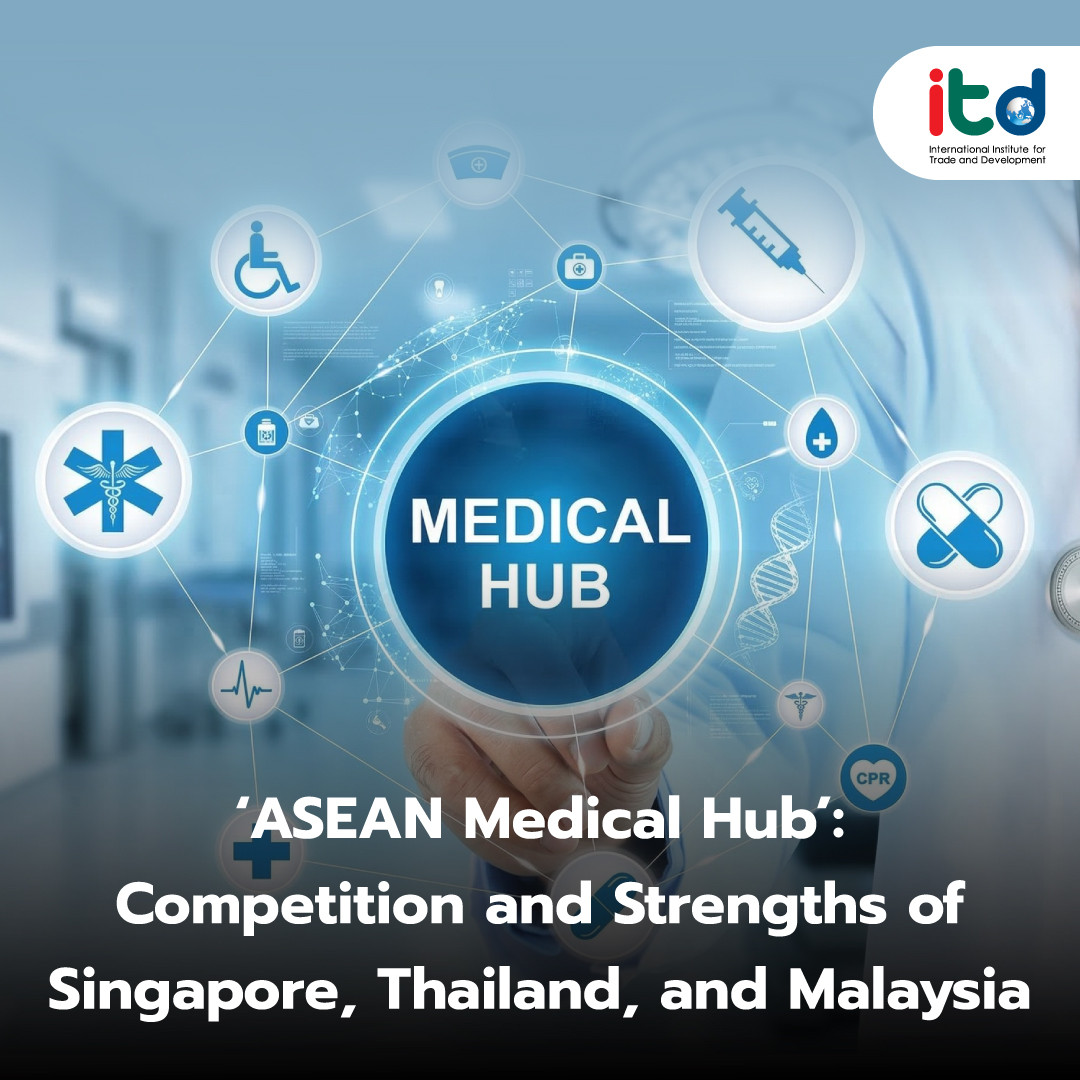
The medical life sciences industry is not only about public health, but can also serve as an important new economic engine for ASEAN, especially among three key countries: Thailand, Singapore, and Malaysia. Each has different structural strengths, healthcare systems, and health tourism strategies. This competition is not only about modern hospitals, but also includes the quality of personnel, costs, access to technology, and the country’s image on the global stage.
Singapore: Leader in research and innovation. It has positioned itself as the center of quality and treatment standards in the region, focusing on advanced research and development (R&D) and becoming a deep technology hub through initiatives such as Biopolis. Singapore does not compete in terms of the number of hospital beds, but in intellectual property. Its key strength is an ecosystem that connects world-class research institutions with major pharmaceutical companies. This makes Singapore a leader in precision medicine and the application of AI in diagnosis, attracting ultra-high-net-worth patients who seek treatments not available elsewhere in ASEAN.
Thailand: Leader in medical tourism with cost efficiency, supported by strong private hospital infrastructure and a distinctive service mind. More deeply, Thailand is moving toward becoming an advanced medical hub through the Eastern Economic Corridor (EEC) policy. The country is accelerating the development of biopharmaceutical production and mRNA-based drug technologies, upgrading from a service provider to an innovation producer. Its main strength is the balance between treatment quality and affordable prices. Many private hospitals meet international standards and provide integrated services (medical tourism and wellness), from treatment, recovery, rehabilitation, alternative medicine, to health tourism. Thailand also has advantages in its service industry, experienced medical personnel with international patients, and strong tourism infrastructure.
Malaysia: An emerging competitor with competitive pricing. It began as a global center for the production of rubber gloves and medical devices, but has now become a notable competitor in value-based healthcare with government support through the Malaysia Healthcare Travel Council (MHTC). Malaysia’s key strength is its leadership in halal standards, covering medicines and medical materials without pork-derived components. Although Malaysia still lags behind Thailand in the number of international patients, its rapid growth and clear government policies give it strong potential to attract large investment from Muslim countries worldwide.
Competition among ASEAN medical hubs can be seen as the development of a “comprehensive healthcare ecosystem.” Singapore acts as a center for innovation and intellectual property, Thailand serves as a treatment hub and large-scale production base, and Malaysia expands niche markets and establishes value-based standards. A key shared challenge for all three countries is building a strong medical supply chain and achieving regulatory harmonization. If ASEAN can unify standards for the approval of drugs and medical devices, the region will not only compete internally but can become a true regional medical hub.
Author:
Mrs. Paveenuch Udommaneetanakit
Senior Researcher
International Institute for Trade and Development (ITD)
www.itd.or.th
Publication: Bangkok BIZ Newspaper
Section: First Section/World Beat
Volume: 39 Issue: 13126
Date: Wednesday, Mar. 25, 2026
Page: 8 (bottom-left)
Column: “Asean Insight”