 728
728 


About Documents
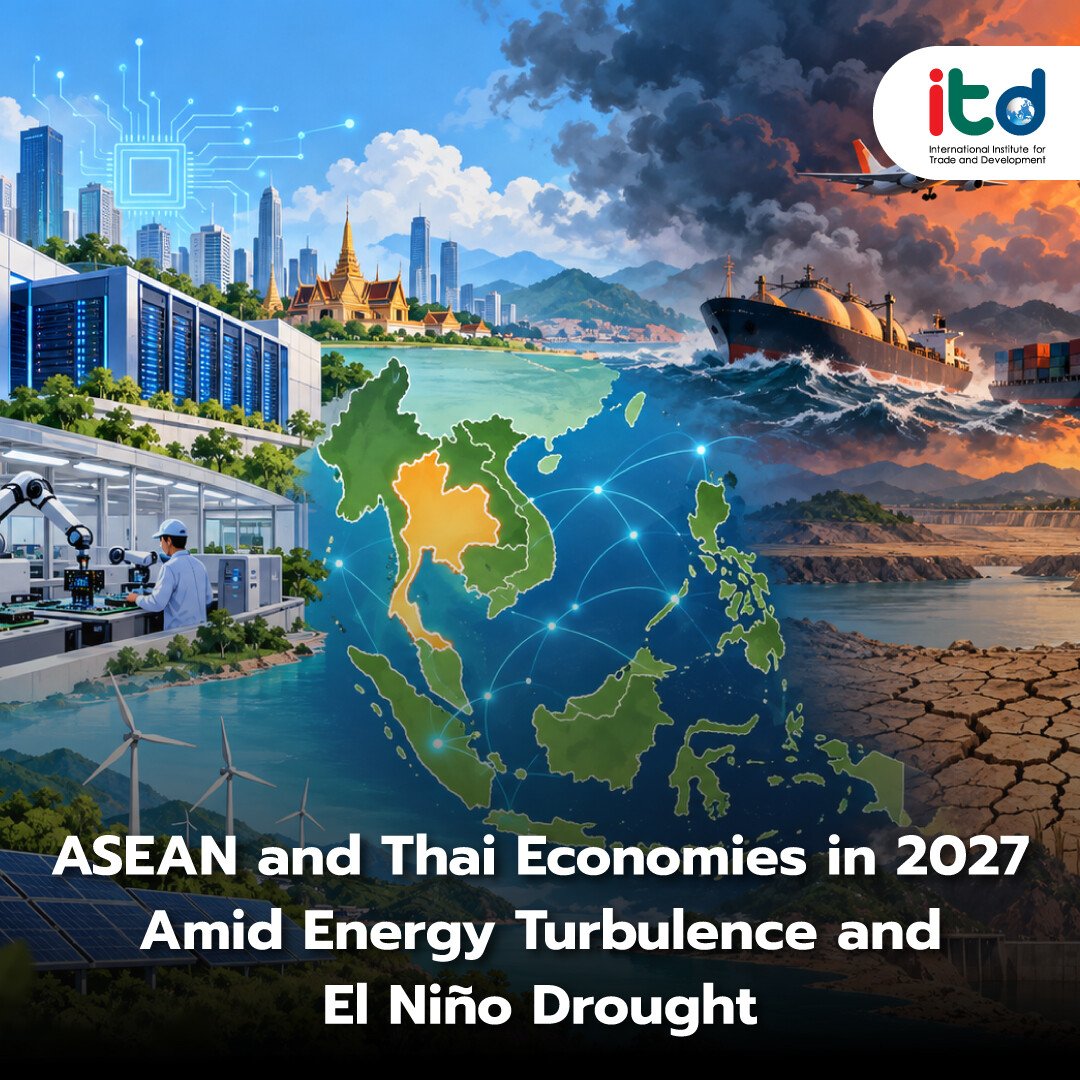
Today, we can no longer avoid the fact that global challenges are no longer distant issues. Changes—whether in policy dimensions, technological development, or climate change—inevitably affect us. A key example is the conflict in the Middle East, which has impacted energy prices and transportation costs. Kasikorn Research Center projects that these impacts will reduce the growth of Thailand’s export value, potentially to below 1% in 2026, and will also affect the public, particularly in terms of energy prices. This clearly reflects that global phenomena are no longer distant matters.
Global challenges are not limited to war alone, but also encompass geopolitical tensions, trade wars, technological development and artificial intelligence, demographic structural changes, and climate change. These factors are only part of the elements that have significant impacts on countries, particularly in Asia and ASEAN, which are more likely to be affected by such volatility due to differences in economic structures among countries and the region’s role as a major export-oriented hub of the world.
The World Bank has similarly addressed global challenges by categorizing them into four main areas: rapid technological change, climate change, trade fragmentation, and demographic structural change. The World Bank notes that although the global economy has become more dynamic compared to the previous period, global volatility and uncertainty continue to have significant impacts on trade and investment.
From these challenges, a key question arises: how can countries adapt and respond to such conditions through existing mechanisms, particularly regional cooperation mechanisms, which play an important role in mitigating the impacts of volatility on countries and especially within ASEAN. The ASEAN Geoeconomic Report, in collaboration with the ASEAN Geoeconomic Task Force (AGTF), presents clear approaches and emphasizes ASEAN’s role on the global stage through an action plan aimed at elevating ASEAN to a leadership position in this context.
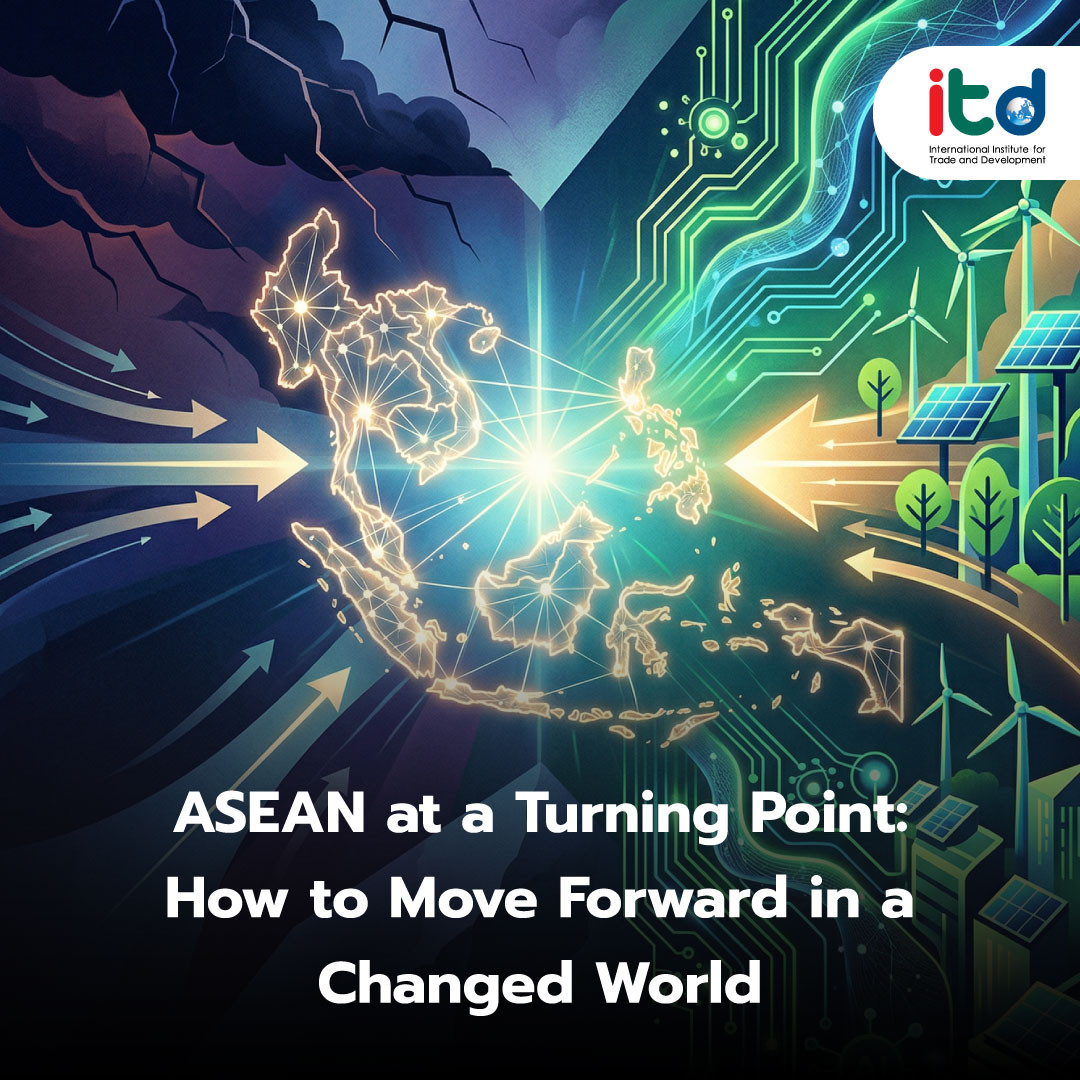
The report clearly states that “the times have changed, and globalization is entering a period of transition.” The key question, therefore, is how ASEAN should respond to this change. The approaches can be categorized into three main areas: (1) managing short-term impacts, including risk management from trade diversion; (2) strengthening economic integration alongside enhancing regional resilience; and (3) reinforcing multilateral systems and ASEAN mechanisms, which are considered the core drivers for moving forward.
The report also emphasizes regional strategies through accelerating the development of existing mechanisms, such as expediting the entry into force of the upgraded ASEAN Trade in Goods Agreement (ATIGA), enhancing the ASEAN Single Window to achieve greater alignment and accommodate a wider range of documents, as well as accelerating negotiations on the ASEAN Digital Economy Framework Agreement (DEFA) to drive the region toward a digital economy and strengthen its capacity to address challenges, particularly in the technological dimension, effectively. At the same time, strengthening the region under approaches (2) and (3) also plays an important role in mitigating the impacts of geopolitical tensions and trade wars.
It can be seen that a key issue consistently emphasized is strengthening unity within ASEAN by leveraging its geopolitical advantages, resources, and cooperation mechanisms to overcome these challenges. A study by ERIA indicates that if ASEAN achieves deeper economic integration—particularly through fully utilizing the RCEP agreement and reducing non-tariff measures (NTMs) by 50%—it would be able to offset the negative impacts of U.S. retaliatory tariffs and also generate positive effects on the region’s GDP.
However, the key question is how ASEAN can translate such potential and advantages into tangible outcomes, given the constraints arising from structural differences among member states and the challenges in implementing policies effectively. At the same time, external risk factors that continue to exert pressure on the region cannot be overlooked. These challenges further underscore that the time has come for ASEAN to accelerate efforts to strengthen cooperation and unity in a serious and sustainable manner.
Author:
Mr. Woraphat Ditpan
Researcher
International Institute for Trade and Development (ITD)
www.itd.or.th
Publication: Bangkok BIZ Newspaper
Section: First Section/World Beat
Volume: 39 Issue: 13131
Date: Wednesday, Apr. 1, 2026
Page: 8 (bottom)
Column: “Asean Insight”