 19


About Documents
Thailand’s goal of joining the Organisation for Economic Co-operation and Development (OECD) by 2028 offers an opportunity to strengthen governance, reform the tax system and promote fair competition. These reforms can help make regulations more transparent, consistent with international practices and supportive of trade and investment.
Thailand submitted its Initial Memorandum on 8 December 2025, marking its entry into the technical review phase conducted by OECD committees. According to a report by the Office of the National Economic and Social Development Council (NESDC), as of 21 October 2026, Thailand had submitted questionnaire responses for 13 of the 25 committees. Membership remains subject to the outcomes of these reviews and a unanimous decision by the OECD Council.
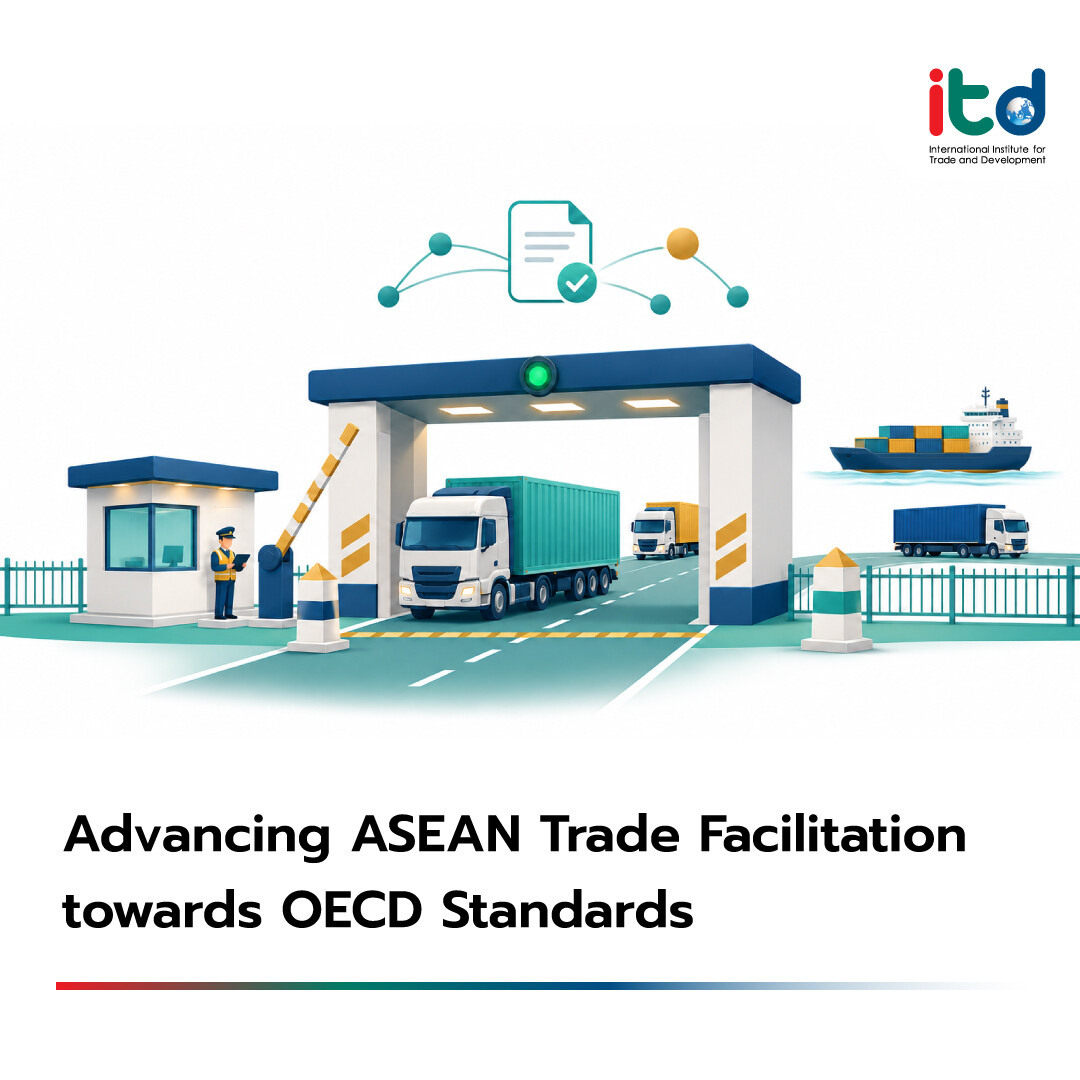
Trade facilitation is one area in which Thailand can use the OECD accession process to improve regulations and public services. This involves reviewing requirements, streamlining procedures, reducing unnecessary administrative burdens, coordinating goods inspections and enabling secure data exchange. These measures help businesses plan shipments more accurately, reduce waiting times and limit the working capital tied up in goods awaiting inspection and release. Exporters can meet delivery schedules more reliably, while manufacturers that use imported raw materials can reduce risks to their production processes.
The 2026 OECD report, Facilitating Trade in the Association of Southeast Asian Nations: Insights from Recent OECD Trade Facilitation Indicators Trends, finds that ASEAN has made progress in improving cross-border trade procedures, particularly in transparency, automation and cooperation among border agencies. According to the OECD Trade Facilitation Indicators (TFIs), procedural complexities and administrative barriers at the border fell by an average of 6% between 2022 and 2024. Singapore, Thailand and Malaysia are among the region’s leading performers.
ASEAN has advanced trade facilitation in several areas. The ASEAN Single Window supports the exchange of large volumes of electronic trade documents among member states, including electronic certificates of origin (e-Form D) and ASEAN Customs Declaration Document (ACDD) data. ASEAN has also developed the ASEAN Customs Transit System (ACTS) to facilitate the movement of goods by road through participating countries. In addition, the ASEAN Tariff Finder makes it easier for businesses to access information on tariff rates, rules of origin and non-tariff measures.
ASEAN also promotes the mutual recognition of Authorised Economic Operators (AEOs), businesses certified as meeting supply chain security standards. These operators receive customs clearance benefits when trading with member states implementing the ASEAN AEO Mutual Recognition Arrangement (AAMRA).
However, these initiatives continue to face challenges arising from differences in readiness and implementation across member states. These include differing regulations, limitations in information technology infrastructure and uneven adoption of automated systems. Such constraints limit the benefits that businesses can obtain from digital systems and regional cooperation.
The OECD report recommends that ASEAN prioritise the effective implementation of trade facilitation measures across all member states. Thailand and other member states should develop their National Single Window (NSW) systems to cover all relevant agencies and establish clear legal provisions for data exchange. This would enable data sharing and reduce duplicate document submissions. At the same time, risk management, pre-arrival processing and electronic payment systems should be integrated to ensure interoperability. The use of electronic documents and digital signatures should also be promoted throughout the trade process.
At the regional level, ASEAN should expand the range of documents exchanged through the ASEAN Single Window and extend ACTS to additional modes of transport, while promoting joint inspections and harmonising operating procedures across countries. Given differences in national readiness, these measures should be accompanied by capacity building, peer learning and technical assistance tailored to each country’s constraints. This would help translate compliance with ASEAN commitments and agreements into measurable reductions in procedural burdens and cargo clearance times.
Authorities should also publish clear, up-to-date information on trade procedures, fees and regulatory changes, and provide opportunities for businesses, particularly smaller firms, to offer feedback. Thailand and ASEAN should therefore use the OECD indicators to identify areas for improvement and monitor progress. These efforts would help ensure that preparations for OECD accession deliver practical benefits to businesses through simpler procedures, lower costs and more predictable cross-border trade, thereby strengthening national competitiveness.
Author:
Ms. Namphueng Tassanaipitukkul
Researcher, Professional Level
International Institute for Trade and Development (ITD)
www.itd.or.th
Publication: Bangkok BIZ Newspaper
Section: First Section/World Beat
Volume: 40 Issue: 13291
Date: Wednesday, Nov. 11, 2026
Page: 8 (bottom)
Column: “Asean Insight”