 22


About Documents
Plastic is widely used in various human activities due to its low cost, versatility, sterility, durability, and lightweight properties. It has become an essential material across a broad range of industries, playing a vital role in construction, household products, medical devices, clothing and textiles, technological equipment, and various types of packaging.
Excessive production, irresponsible consumption, and improper disposal all contribute to plastic pollution. Each year, more than 400 million tonnes of plastic are produced and consumed worldwide, generating over 300 million tonnes of plastic waste. Yet only about 9% of this waste is recycled. A substantial share of plastic waste is still mismanaged, with large quantities leaking into terrestrial and aquatic environments. As a result, plastic accumulates in ecosystems, posing serious threats to the environment, wildlife, and human health.
Plastics are highly durable materials that can take 20 to 500 years to degrade, with some estimates placing the range at 100 to 1,000 years. Rather than biodegrading completely and disappearing from the environment, most plastics gradually fragment into smaller particles known as microplastics and nanoplastics. These particles have been found in ecosystems around the world.
Trade plays a pivotal role in the circulation of plastics throughout the global supply chain and across the entire plastics life cycle. According to UNCTAD, global plastics exports reached 337 million tonnes in 2024, with a total export value of US$1.12 trillion, accounting for approximately 5% of total merchandise trade. In contrast, exports of non-plastic substitutes were valued at US$484 billion. However, these alternative materials face import tariffs that are, on average, twice as high as those applied to conventional plastics, creating a significant barrier to the transition toward more environmentally sustainable alternatives.
In 2024, ASEAN exported US$97.7 billion worth of plastics and associated plastics. Exports to other ASEAN member countries were the largest, accounting for 23.33% of the region’s export value, followed by China and the United States. ASEAN imported US$79.8 billion worth of plastics and associated plastics. China was the largest supplier, accounting for about one-third of total import value. Other ASEAN member countries ranked second with a combined share of 25.34%, followed by Japan.
Addressing plastic pollution requires looking beyond plastic waste alone and taking into account the entire life cycle of plastics. Trade measures have therefore emerged as one of the effective tools for tackling plastic pollution. Examples include bans on plastic waste imports, minimum recycled content requirements for products entering the market, regulations on plastic packaging, restrictions or prohibitions on products containing intentionally added microplastics, and eco-design requirements. Such measures have been adopted by a growing number of countries, both within ASEAN and among its major trading partners, particularly the European Union.
Singapore has developed one of ASEAN’s most advanced waste management systems and has taken a comprehensive approach to addressing plastic pollution. The country promotes behavioral change through the 3R principle: Reduce, Reuse, and Recycle. It has also introduced regulatory measures requiring producers, importers, retailers, and brand owners to report packaging data and submit 3R plans. Large supermarket operators are required to charge consumers for disposable carrier bags. In addition, the Beverage Container Return Scheme, consumers pay a deposit on eligible pre-packaged drinks and receive a refund when they return the empty container to a designated collection point.
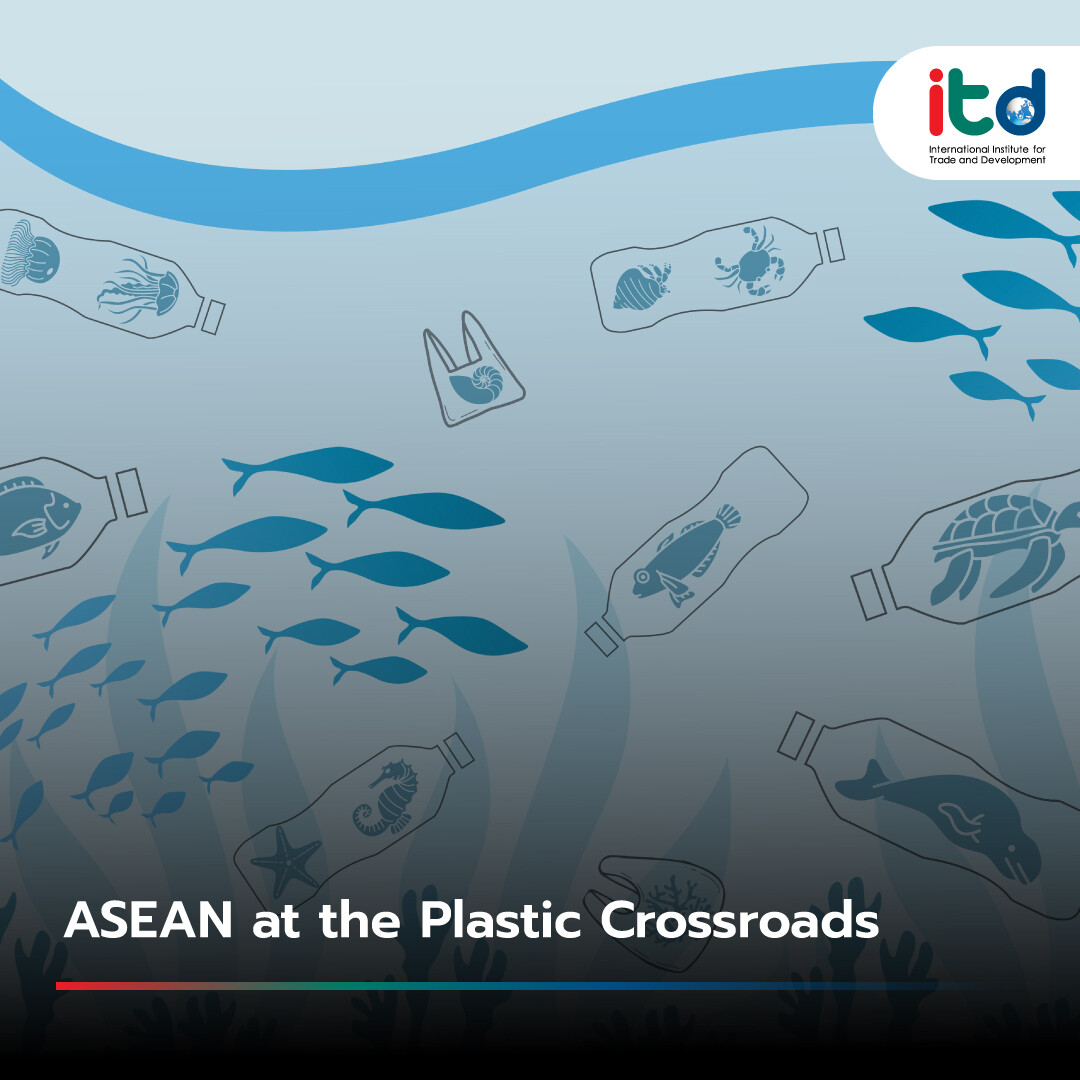
Plastics are an integral component of a wide range of industries, and ASEAN is both a major producer, processor, and consumer of plastic materials. Yet many ASEAN member states continue to face challenges arising from inadequate waste management systems and insufficient policy measures to address plastic pollution. As a result, the region finds itself at a critical crossroads, caught between economic growth that comes at the expense of environmental degradation and efforts to reduce environmental impacts that may impose constraints on economic activities and growth
The key question, therefore, may not be whether ASEAN can stop using plastics, but rather how ASEAN can continue to use plastics without leaving the burden to future generations. The choices made by ASEAN today will determine whether the region becomes a hub for the circular economy or remains one of the world’s major sources of plastic pollution in the years to come.
Author:
Ms. Patcha Thamrong-ajariyakun
Researcher, Professional Level
International Institute for Trade and Development (ITD)
www.itd.or.th
Publication: Bangkok BIZ Newspaper
Section: First Section/World Beat
Volume: 40 Issue: 13301
Date: Wednesday, Nov. 25, 2026
Page: 8 (bottom)
Column: “Asean Insight”