 22
22 


About Documents
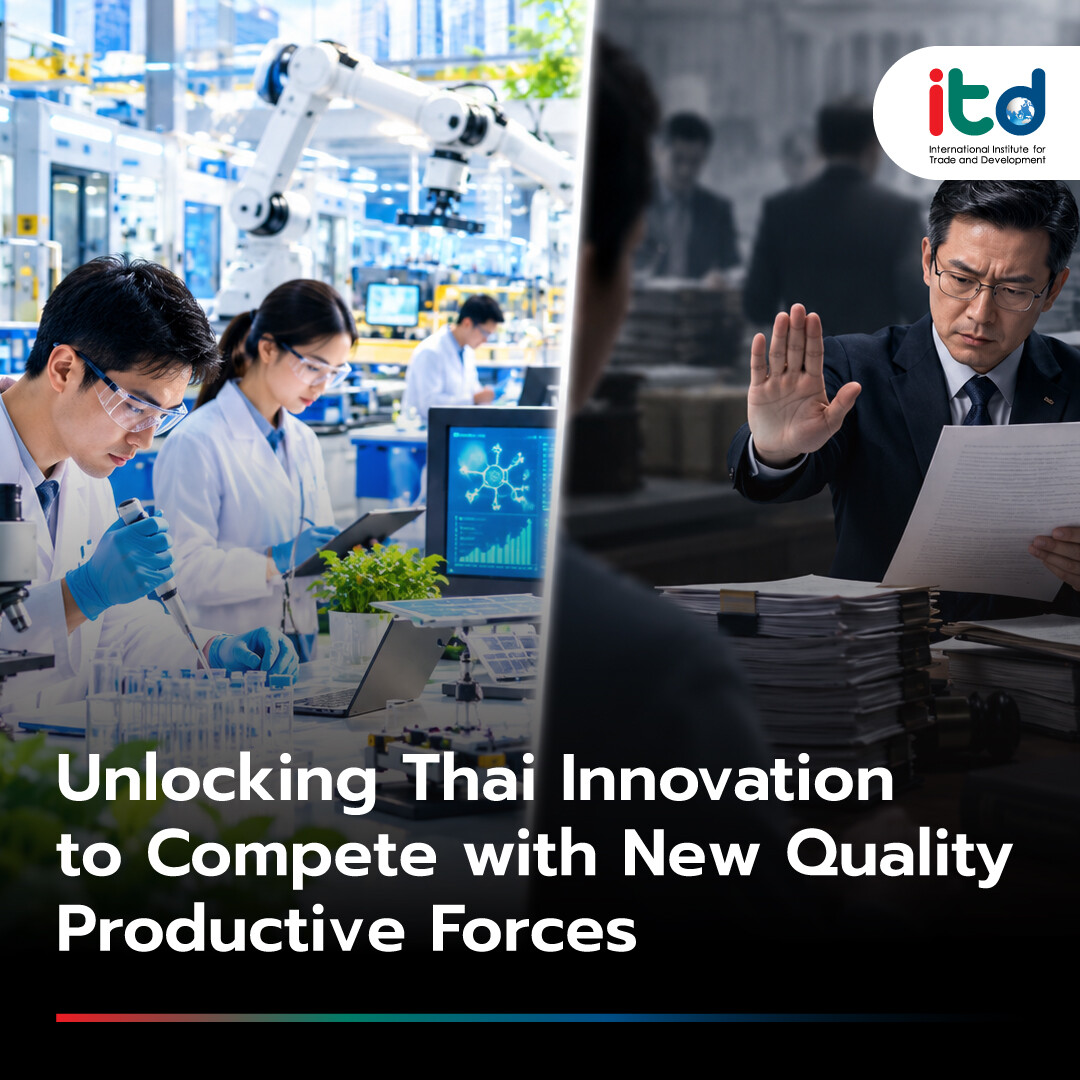
The current transformation of the global economic structure is driven by the concept of “New Quality Productive Forces,” which focuses on utilizing advanced innovation, artificial intelligence, and green technologies as core elements to generate added value. This strategy is not merely an upgrade of traditional manufacturing sectors, but rather the creation of a new technological ecosystem aimed at reducing reliance on cheap labor and the real estate sector.
Under the context of the technology war between superpowers, this concept serves as a shield against sanctions and a means to build technological sovereignty. China and other major powers are aiming to export their own technological ecosystems and standards to gain geopolitical advantages. This phenomenon forces countries to mitigate the risks of external dependence and urgently build their own internal capabilities.
The true battleground in the new economic order has thus shifted from capital competition to a “global war for talent”. Countries worldwide are accelerating efforts to cultivate, attract, and retain high-skilled talent in advanced technology fields through tax incentives, special visa programs, and R&D infrastructure enhancements, as elite talent is the decisive factor in creating game-changing innovations.
For Thailand, the major bottleneck in building New Quality Productive Forces is an outdated education system. Developing Thai human capital requires reforming from rote learning toward building STEM skills, digital literacy, and creative analytical thinking, alongside promoting lifelong learning to produce high-level intellectual talent aligned with the demands of future industries.
In the industrial sector, Thailand remains trapped in Original Equipment Manufacturing (OEM), which generates low added value and faces high risks of substitution. Escaping this trap requires upgrading to Original Design Manufacturing (ODM) for advanced components, combined with investment promotion conditions that mandate technology transfer to move the nation up to higher-value positions in the supply chain.
However, Thailand’s most severe structural obstacle is its legal framework. The “Law is slow, Tech is fast” phenomenon leaves many new innovations locked in regulatory vacuums. When government agencies adhere to traditional regulatory frameworks, innovations not explicitly supported by written law become illegal and are deprived of operational opportunities.
A regulatory culture focused on zero-risk control, along with complex public procurement procedures, has created a chilling effect among Thai researchers and entrepreneurs. Government officials choose non-approval to avoid legal liability, resulting in delayed national technological development and causing Thailand to lose competitiveness relative to other ASEAN nations.
The nation’s way forward is therefore not piecemeal legal reform through ad-hoc committees, but an overhaul of the legislative system toward “Agile Governance”. The public sector must shift from drafting laws that lock in specific technologies to employing broad, principle-based frameworks with mandatory sunset clauses to ensure regulations are continuously updated.
Furthermore, expanding regulatory sandboxes across all strategic industries and adopting a legal mindset of “guardrails” instead of “blocking walls” will allow new innovations to undergo real-world safety testing while building foreign investor confidence without compromising national competitiveness.
At the regional level, Thailand and ASEAN must transition from consumers into “co-innovation partners”. Unifying as an ASEAN tech block to set interoperable standards compatible with all major powers will enhance bargaining power, prevent absolute technological dependency, and maintain strategic balance in geopolitical conflicts.
Transitioning the legal system toward flexibility within 3 to 5 years will be the key to empowering Thailand with sufficient capability to ascend to a high-income nation within 10 to 15 years. Developing genuine awareness and taking serious action today is truly the deciding factor for the nation’s economic future.
Author:
Dr. Punrop Rajapongsa
Director, Office of Policy Development and Research
International Institute for Trade and Development (ITD)
www.itd.or.th
Publication: Bangkok BIZ Newspaper
Section: First Section/World Beat
Volume: 40 Issue: 13266
Date: Wednesday, Oct. 7, 2026
Page: 8 (bottom)
Column: “Asean Insight”